
- Home
- PEB Sheds
Pre-Engineered Building (PEB)
Pre-Engineered Building (PEB)
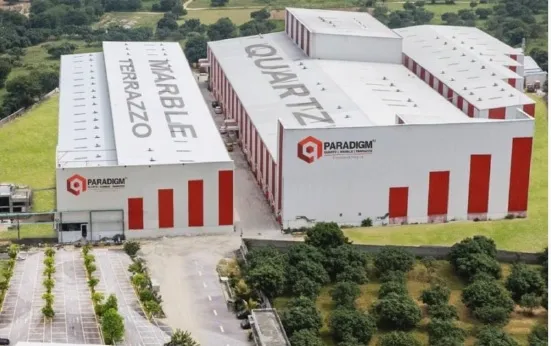
A Pre-Engineered Building (PEB) shed is a modern, factory-made steel structure designed and fabricated with a single concept to satisfy a wide range of structural and aesthetic requirements.
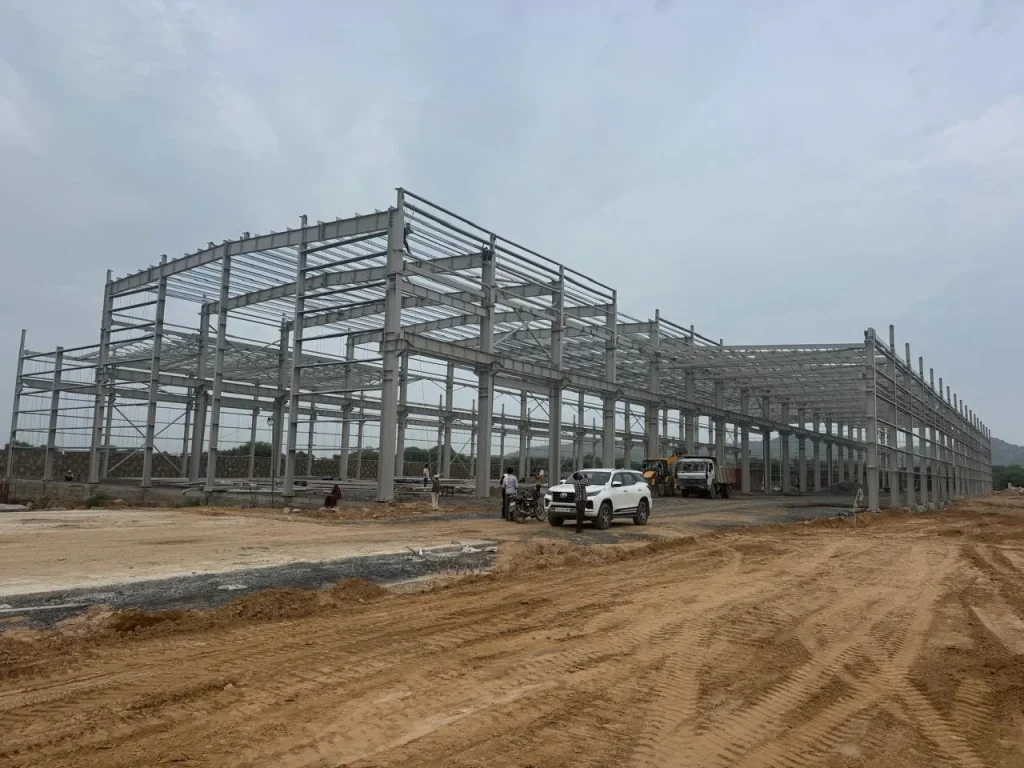
In the PEB process, the entire structure is engineered and manufactured off-site as standardized components. These components are then transported to the construction site and bolted together for quick assembly. This approach offers a smart, efficient, and faster alternative to traditional construction methods.
Key Components
1
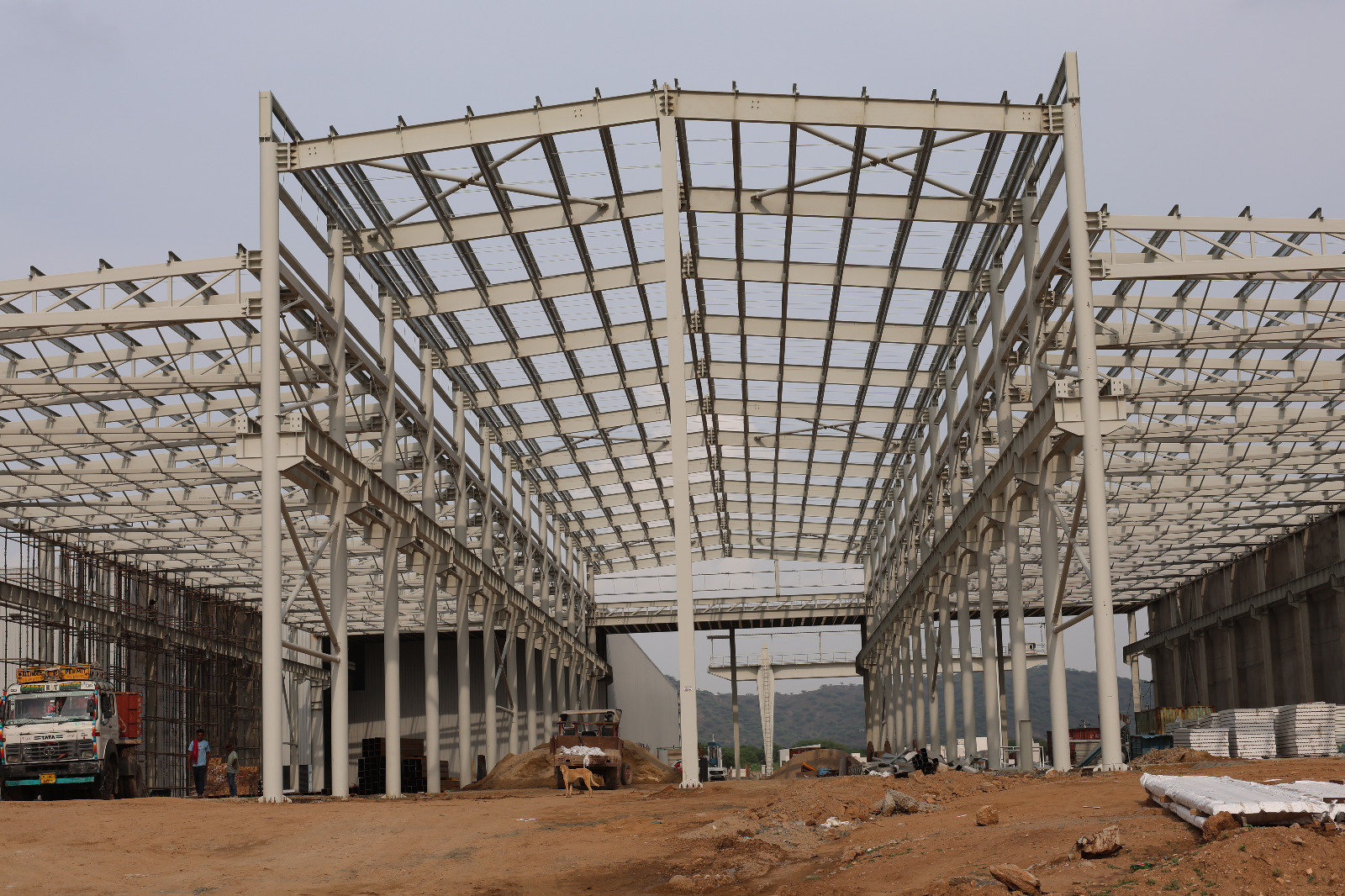
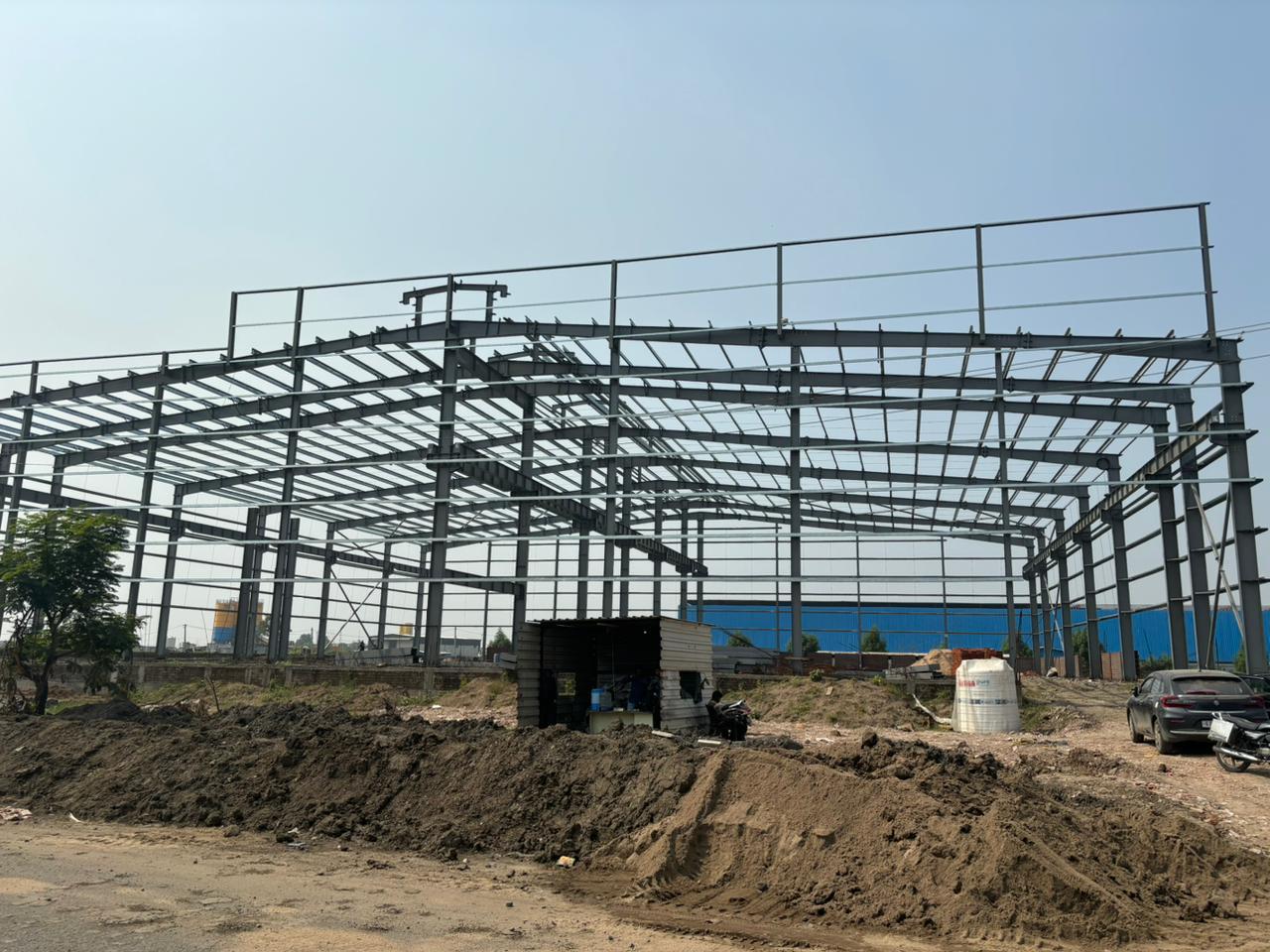
Primary Framing
Tapered columns and rafters (main load-bearing frames).
2
Secondary Framing
Purlins (roof beams), Girts (wall beams), and Eave Struts (connecting roof and walls), usually cold-formed Z or C sections.
3
Cladding
Steel roof and wall panels, often insulated.
Types of PEB Sheds
PEB sheds are categorized primarily by their structural framework, offering flexibility for different needs:
| Type of PEB Structure | Description | Ideal Application |
|---|---|---|
|
Clear Span |
Features a completely unobstructed interior with no internal support columns, as the main frames bear all loads. |
Warehouses, aircraft hangars, sports facilities, large assembly halls. |
|
Multi-Span |
Uses interior columns to support the roof load across multiple parallel spans. This is the most economical design for very wide buildings. |
Large factories, distribution centers, industrial facilities with heavy equipment. |
|
Single Slope |
Features a roof that slopes entirely in one direction from the high point to the low point. |
Smaller warehouses, retail units, or building extensions (Lean-To sheds). |
|
Multi-Gable |
Features multiple peaked (gable) roof sections side-by-side, creating a series of triangular end walls. |
Showrooms, recreational centers, or very large facilities requiring specific aesthetics. |
|
Lean-To |
An extension structure with a single-sloped roof that attaches to an existing primary building. |
Adding storage space, offices, or workshops to an existing facility. |
PEB Structural Components
1. Primary Structural Members
These are the main load-bearing elements of the building frame, designed using customized tapered sections to optimize material usage and strength.
Columns: Vertical support members that transfer load to the foundation.
Rafters: Sloped or horizontal members that span the width of the building, typically connected to the columns to form the main rigid frame.
End Wall Frames: Lighter frames located at the ends of the building, primarily supporting the wall sheeting.
2. Secondary Structural Members
These cold-formed steel members provide support for the roof and wall sheeting and help brace the structure against lateral forces.
Purlins: Horizontal roof beams that run perpendicular to the rafters to support the roofing sheets.
Girts: Horizontal wall beams that run between columns to support the wall sheeting.
Eave Struts: Run along the roof edge at the eave, connecting the roof purlins and wall girts.
Bracing: Rods, cables, or angles installed diagonally in the roof and walls to provide rigidity and stability against wind and seismic forces.
3. Sheeting and Accessories
These form the building envelope, providing weather protection and aesthetic appeal.
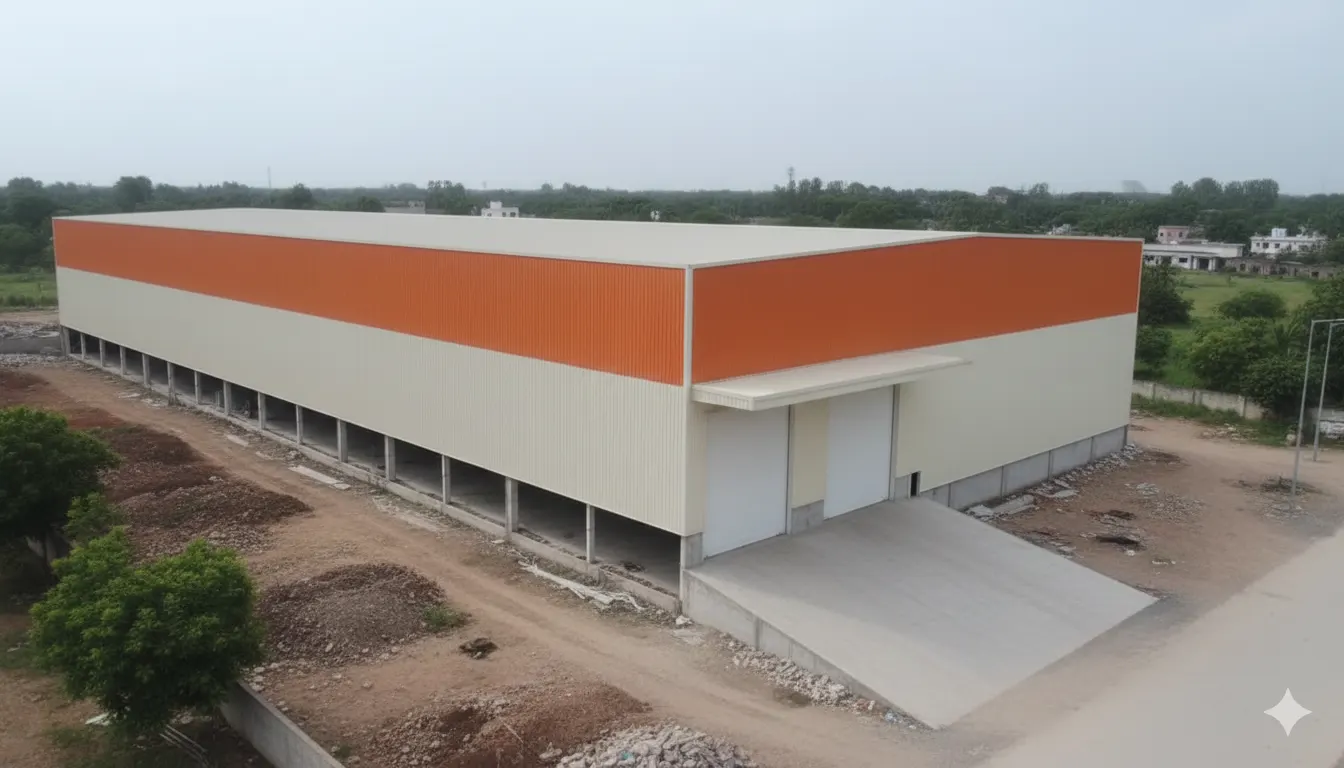
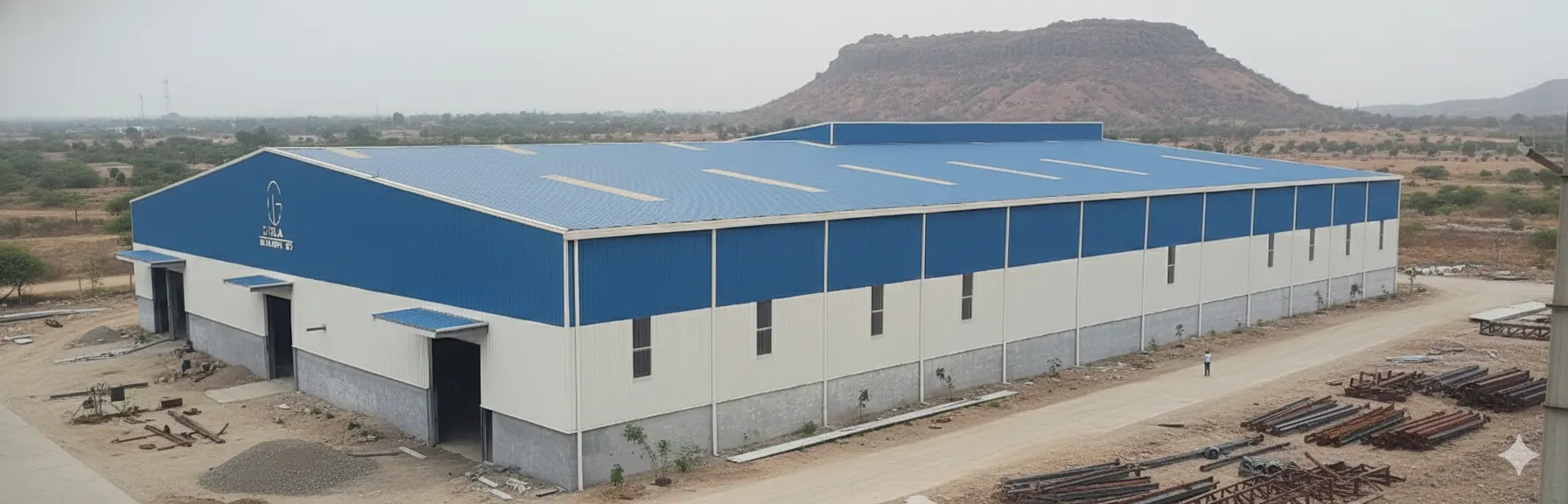
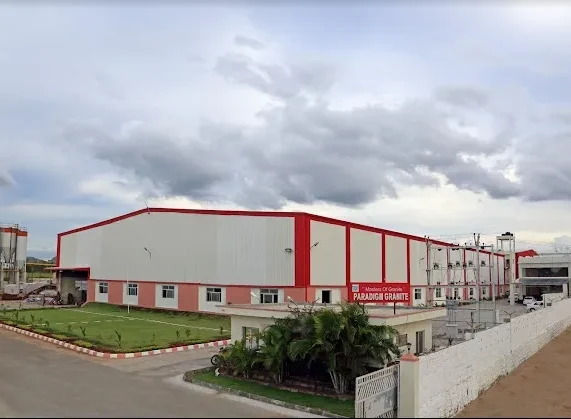
Roof and Wall Sheeting/Cladding: Pre-coated profiled metal sheets (typically high-strength corrugated or ribbed steel) that enclose the building.
Ridge Vents/Caps: Components placed at the apex of the roof to cover the joint and allow for ventilation.
Flashings and Trims: Customized metal pieces used to provide a weather-tight seal at openings, edges, and connections (e.g., at the eaves, corners, and door openings).
Gutters and Downspouts: Systems installed to manage rainwater run-off from the roof.
Fasteners: High-quality self-drilling screws and bolts used to securely attach the sheeting to the secondary members.
Core Features of PEB Sheds
PEB technology combines advanced engineering with high-quality materials, offering several superior features :
- Optimized Design:Components like tapered sections are designed precisely according to the stress diagram, reducing unnecessary material, and making the structure 30-35% lighter than conventional steel.
- High Strength & Durability:Constructed from high-grade steel, PEB structures are highly resistant to fire, corrosion (with proper coatings), and can withstand severe weather, seismic activity, and heavy loads.
- Design Flexibility:Easily customized in size, shape, and accessories (like mezzanines, skylights, vents, and crane systems) to meet specific operational requirements.
- Easy Expansion:Modular construction makes future expansion in length simple by adding additional bays without disrupting existing operations.
- Superior Quality Control:Since 80% of the fabrication is done in a controlled factory environment, the quality of welding, cutting, and
protective coating is fully assured.
Benefits Over Regular (Conventional) Building
PEB sheds offer distinct advantages over traditional construction methods like conventional steel framing or brick-and-mortar:
- Faster Construction Time: The pre-fabricated nature and bolt-up assembly drastically reduce on-site construction time by 30% to 50%, leading to earlier project completion and a faster return on investment (ROI).
- Cost Efficiency: Savings come from:
- Reduced Material Cost due to optimized steel usage and less waste.
- Lower Labor Costdue to quicker, less complex on-site assembly.
- Lighter Foundation requirement due to the reduced structural weight.
- Predictable Project Timeline & Cost: Because components are pre-designed and manufactured under a fixed plan, the project timeline and total cost are more predictable, minimizing the risk of budget overruns.
- Eco-Friendly/Sustainability: Steel is 100% recyclable, and the factory fabrication process generates far less construction waste than traditional methods.
- Low Maintenance: High-quality factory-applied paint and cladding systems ensure long durability with minimal need for constant repairs.
Comparison: PEB Shed vs. Conventional Construction
| Feature | Pre-Engineered Building (PEB) Shed | Regular/Conventional Construction |
|---|---|---|
|
Design Approach |
Standardized, software-based, factory-engineered modules. |
Fully custom, site-specific, and often involves on-site design adjustments. |
|
Construction Time |
30-50% Faster; fast on-site bolt-up assembly. |
Slower; involves extensive on-site fabrication, welding, and curing time. |
|
Cost Predictability |
High; based on factory production; less risk of budget overruns. |
Variable; prone to market fluctuations, labor issues, and site-related delays. |
|
Structural Weight |
Lighter (30% to 35% less) due to optimized tapered sections. |
Heavier; uses uniform hot-rolled sections regardless of load distribution. |
|
Quality Control |
Superior; components manufactured in a controlled factory environment. |
Depends heavily on local site labor skill and supervision quality. |
|
Expansion/Modification |
Easy and non-disruptive by adding new bays. |
Complex, time-consuming, and often requires significant redesign. |
Common Usages and Applications
The versatility, speed, and cost-effectiveness of PEB sheds make them suitable for almost every single-storey, non-residential construction need.
- Industrial:
- Manufacturing Plants and Factories
- Workshops and Fabrication Units
- Industrial Sheds with Cranes
- Storage & Logistics:
- Warehouses and Distribution Centers
- Cold Storage Facilities
- Grain Storage and Agricultural Sheds
- Commercial & Institutional:
- Showrooms and Hypermarkets
- Office Complexes
- Schools, Auditoriums, and Hospitals
- Infrastructure & Specialized:
- Aircraft Hangars
- Metro Stations and Bus Terminals
- Sports Arenas and Gymnasiums